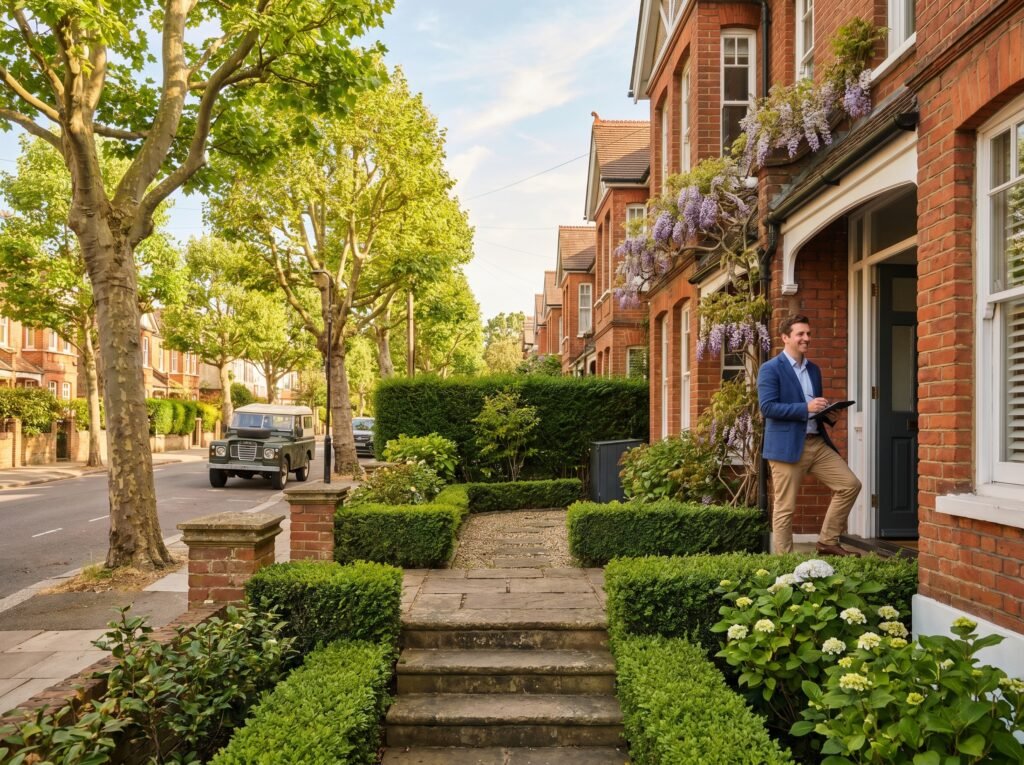
It usually starts with a phone call from an estate agent.
“Before we can list the property, we’ll need a valid EPC.”
And that’s when a lot of homeowners and landlords realise they either don’t have one, or the one they have expired three years ago and they never noticed. It happens constantly — and it doesn’t need to be stressful.
If you’re selling or renting a property in Wimbledon, Kingston, or anywhere across South West London, here’s the honest, plain-English version of everything you need to know about EPCs in 2026.
What Is an EPC, and Why Is It a Legal Requirement?
An Energy Performance Certificate — or EPC — is a document that rates your property’s energy efficiency on a scale from A (the most efficient) to G (the least). It includes an indication of typical energy and fuel costs, and a list of recommended improvements that could raise your rating.
It’s not optional. Under the Energy Performance of Buildings Regulations 2012 (as amended), you must have a valid EPC in place before you can legally market a property for sale or rent. Failure to have one can result in a fine of up to £5,000.
The certificate is valid for ten years from the date of issue — but there are situations where you should get a new one even if your old certificate hasn’t expired yet. More on that in a moment.
The Prime EPC provides fast, accredited EPC assessments across Wimbledon, SW19, Kingston, Surrey, and Central London. Book yours today — same-day appointments available.
The Wimbledon and SW19 Property Market: What EPC Ratings Look Like Here
Wimbledon is an interesting mix of property types — Victorian and Edwardian terraces and semis that make up much of the residential streets around Wimbledon Village and South Wimbledon, alongside newer builds and converted flats in areas like the Broadway and Wimbledon Chase.
Older properties — particularly the Victorian terraces you find on streets like Hartfield Road or around Merton Hall Road — often have original features that are charming but not energy-efficient. Single-skin walls, older sash windows, loft insulation that was installed decades ago. These properties frequently come in at D or E.
Newer builds and recently renovated flats tend to do much better — often scoring B or even A if they’ve been built to current Part L standards.
What does this mean practically? If you’re selling a Victorian terrace in SW19, don’t be surprised if your EPC comes back at D. It’s extremely common. And it doesn’t need to derail your sale — but you do need to understand what it says and how to address buyer questions.
Do I Need a New EPC If I Already Have One?
Technically, if your EPC is less than ten years old and the property hasn’t significantly changed, you can use the existing one. But here’s when you probably want a fresh assessment:
- Your existing EPC is more than seven or eight years old — it may not reflect improvements you’ve made
- You’ve had significant work done: new boiler, insulation added, windows replaced, solar panels installed
- You’re a landlord preparing for the upcoming EPC C requirement by 2030 — you want an accurate baseline
- Your old EPC has errors or doesn’t reflect the current state of the property
- You’re concerned a low rating could affect your sale price or rental demand
A fresh EPC costs between £45 and £100 for most residential properties — a tiny amount relative to the value of your property and the smooth progression of a sale or let.
At The Prime EPC, a standard 1-bed property in Wimbledon or Kingston starts from £45, with 3-bed houses typically around £70. We offer transparent, upfront pricing with no hidden fees. See ohttps://www.gov.uk/find-energy-certificateur full pricing here.
How the EPC Assessment Actually Works
A lot of people aren’t sure what happens during an assessment. It’s actually quite straightforward — and nothing you need to prepare extensively for.
The assessor visits your property and spends around 30–45 minutes going through it. They’ll look at:
- The construction type of walls, floors, and roof
- The type of glazing (single, double, triple pane, and approximate age)
- Loft insulation — how much, and what type
- The main heating system — boiler type, age, efficiency, controls
- Hot water system
- Any renewable energy systems (solar panels, heat pump, etc.)
- Fixed lighting (LED vs older bulbs)
They may also access the loft space if there is one. You don’t need to do anything special — just be there (or arrange access), and make sure the assessor can reach the boiler, loft hatch, and all rooms.
The assessor then feeds all of this into the government-approved SAP (Standard Assessment Procedure) software, which calculates your EPC rating. The certificate is lodged on the official government EPC register, and you receive your copy — usually within 24 hours.
The Prime EPC offers standard 3-working-day delivery and an optional same-day service for urgent cases. Book an assessment with us across Wimbledon, Kingston, and South West London.
What Does an EPC D Rating Mean for Selling in Wimbledon?
Short answer: it’s fine for selling. There’s no minimum EPC requirement for property sales in England (unlike for rentals). You need to have a valid EPC, but the rating itself doesn’t prevent a sale.
That said, buyers do look at EPCs — particularly those aware of future energy costs and the environmental impact of their purchase. Research consistently shows that properties rated A or B command a premium of up to 14 percent compared to similar lower-rated homes. Even a C versus D difference can matter to energy-conscious buyers.
In Wimbledon’s competitive market, a D-rated Victorian terrace going up against a recently renovated C-rated property of similar size might face slightly more scrutiny on price. But in practice, millions of D-rated properties sell every year with no issues — buyers factor it into their thinking, not their ability to proceed.
What a good EPC assessor will do is help you understand the recommendations: the specific improvements — cavity wall insulation, loft top-up, boiler upgrade — that could push your D to a C. You can then decide whether to make improvements before marketing, or market as-is and be transparent about the rating.
Renting Property in SW19 and Kingston: The Rules You Must Know
For landlords, the EPC rules are stricter and have teeth.
Currently: you cannot legally rent a property rated F or G without a valid exemption. The minimum is E.
Coming in October 2030: the minimum rises to C. The government confirmed this in January 2026 as part of the Warm Homes Plan. Fines for non-compliance are up to £30,000 per property.
If you’re a landlord in Wimbledon, Kingston, or across the South West London area, here’s what this means in practical terms:
- If your property is currently rated C, D or better: you’re compliant now. For 2030, D-rated properties will need to improve.
- If your property is rated E: you’re compliant now. You have until 2030 to reach C.
- If your property is rated F or G: you should not be letting it without a valid exemption registered. Speak to a professional.
The smart move for landlords is to get an accurate current EPC, look at the recommendations report, and start planning improvements now — before contractor waiting lists grow and prices rise.
The Prime EPC provides EPC assessments specifically for landlords in the Wimbledon and Kingston area, including bulk pricing for portfolio landlords. Get in touch to discuss your requirements.
Kingston Upon Thames: EPC Certificates for KT Postcodes
Kingston is a fascinating area for EPCs because of the mix of housing stock. The older Victorian streets around Surbiton and Kingston Hill sit alongside modern riverside apartments and new-build estates. The property types — and therefore the typical EPC challenges — vary enormously.
In older Kingston properties (pre-1930s), common issues affecting EPC ratings include: no cavity wall insulation (solid walls are harder and more expensive to insulate), older gas boilers without modern controls, single-glazed windows in listed buildings or conservation areas, and modest loft insulation depths.
In newer flats and developments along the Thames, you’ll often find high B or even A ratings — these were built to modern energy standards.
The Prime EPC covers all KT postcodes — KT1, KT2, KT3, KT4, KT5, KT6 and beyond — typically with next-day appointment availability. Book a Kingston EPC assessment here.
Central London: EPC for Zones 1-3
Selling a flat in Clapham? Renting an apartment in Battersea? Dealing with a leasehold property in Chelsea? EPCs are required for all of these, and in Central London the variety of property types throws up some specific challenges.
Listed buildings and properties in conservation areas can sometimes face limitations on what improvements are achievable — which is relevant both for the recommendations in your EPC and for landlords planning to reach the 2030 C minimum.
Purpose-built flats in ex-local authority blocks sometimes have communal heating systems that complicate the assessment. Converted Victorian houses — where a single property has been split into multiple flats — require individual EPCs for each unit.
The Prime EPC provides EPC assessments across all Central London zones, with priority service and fast turnaround. Book your Central London EPC assessment.
How Long Does an EPC Take, and What Does It Cost?
We believe in transparent pricing — you shouldn’t have to call around for quotes or navigate vague “from” prices.
At The Prime EPC, a standard assessment for a 1-bed flat or house in SW19 starts from £45. A 3-bed house is typically £70. Larger or more complex properties are priced according to size and type, and we provide an instant estimate on our website before you commit to anything.
Standard delivery is within 3 working days of the assessment. For urgent situations — an estate agent needing a certificate before a listing goes live, a landlord completing a tenancy — we offer same-day and next-day service as an optional add-on.
Optional extras include floor plans, property photographs, and drone roof and house shots — useful for listings and portfolio management.
Get an instant price estimate using our online calculator, with no payment required until after the assessment. Calculate your EPC cost here.
Why Choosing an Accredited Assessor Matters
Not all EPCs are created equal. The certificate lodged on the government register is only as accurate as the assessment that produced it. An assessor who rushes through, misses the loft insulation depth, or doesn’t check the boiler efficiency properly can produce a certificate that undersells your property or — worse — gives you a falsely optimistic rating that causes problems later.
The Prime EPC assessors are accredited by ABBE, Elmhurst, and City & Guilds — the primary accreditation bodies recognised by the government’s EPC scheme. Every certificate we produce is lodged correctly on the official register and is fully MEES compliant.
We also take the time to explain your result. If your property comes in at D and there are specific recommendations, we’ll walk you through what each one means — not just hand you a document and leave.
Ready to Book Your EPC in Wimbledon, Kingston, or South West London?
Whether you’re selling, renting, or just want to understand your property’s energy efficiency, The Prime EPC makes it straightforward.
Same-day appointments. Clear pricing. No stress.
We serve SW19 and surrounding Wimbledon areas, all Kingston and Surrey KT postcodes, and Central London zones 1-3. Our assessors are local, professional, and genuinely committed to giving you an accurate, useful certificate — not just ticking a box.
Book your EPC assessment today — use our online form here or call us on +44 7764 231083. We respond within 2 hours during business hours.